Showing posts with label GLIMPSE. Show all posts

March 29, 2012

Follow a science writer using a motivation trick -- a STEM career glimpse

Do you ever feel a burning desire to start a new project?

I often do, and I use it to fuel the completion of current projects, one by one.

My experience is that new ideas are exciting--fresh, clever, perfect! I can't wait to get started on them.

But soon after starting, challenges arise--problems to solve. Maybe what I have is not as good as what I had dreamed up. It's taking forever. It's just plain hard. Then it sits.

Fortunately, I always have other ideas, and a burning desire to start on those.

Here's my trick: I tell myself that I can't start a new project until I've finished the current one. As if by magic, I begin to tackle problems, come up with solutions, and find extra energy to get it all done.

How do I make myself finish the old project before starting the new one? I have the discipline simply because this trick works like a charm.

The triumph of completing project after project and getting tons of things done makes me want to use this trick again and again.

Try it a few times. If it helps, you too might want to do it again!

LINKS
• This motivation trick is more powerful for small, short projects than the last two: telling a friend or keeping a hope journal.

• For a ton of links about science writing, scroll down to LINKS AND MORE after you click here.

March 21, 2012

Follow a science writer using a motivation trick - a STEM career glimpse

If you wish you could make more progress on a long, hard project, try this trick. It helps me. Maybe it will help you too.

I use this trick when I'm writing a book, and it's hard to find or make the time after working as a scientist and translator, and taking care of family, friends, and home.

I keep a "hope journal." It's not a regular journal or diary. I write in it only what I've done to make progress on one project--nothing else--every day, for two weeks or two months or until the project is done. One hope journal is for only one project.

A hope journal begins as a blank notebook. I like small books for my small hands.

Hope journals
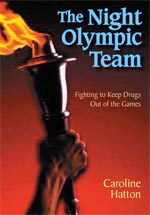
for The Night Olympic Tea, Horse Stories, and two future books
First, write the name of your project on the cover.

Then, every day, write down the date and what you did on that date to make progress.

I like to circle the date, and to write in blue or black every other day.
It's O.K. if you don't move mountains every day. Do your best to do something, every single day.

Writing in my hope journal at night was too hard because I was tired. Now I write, first thing in the morning, what I did the day before.
For example, I wrote in my hope journal for Horse Stories, about a story entitled "Paco of the Andes:"

- I revised Paco in my hotel room, in pencil on a printout.

- I revised Paco in the plane on the way home.

- I started entering my edits into my Word file, from the printout I carried on my trip.

- I finished entering edits and reprinted Paco.

I submitted "Paco of the Andes" to The School Magazine in Australia in August 2008. The editor accepted it for publication within two months. It was published within a year after that.

My horse stories are fictional, but I do research, check facts, and consult experts, exactly as I would for science writing.

The funniest entry I made was in my hope journal for The Night Olympic Team: I wanted to highlight background information, to make sure it didn't go on too long, taking readers out of the ongoing story. But I dropped the highlighter. It left a spot on the carpet. ARGH! I tried to get it off with spot remover. When that didn't work well enough... I gave the carpet a haircut!

Keeping a hope journal is as powerful for me as telling a friend what I will get done before we meet (read my post about that trick). The journal works better because it goes on day after day.
LINK

• For a ton of links about science writing, scroll down to LINKS AND MORE after you click here.

March 7, 2012

Follow a science writer using a motivation trick - a STEM career glimpse


If you wish you could get more done, try this trick. It works for me. Maybe it will work for you too.

I use this trick when I'm working on a new writing, but have no deadline to drive me to make progress.

Sometimes choosing my own deadline helps: "I'll complete the first draft by March 31."

What helps ten times more is simply telling a friend. And what helps even more is telling a friend whom I'm scheduled to meet, what I'll get done by the time we meet: "I'll finish revising once by the time I see you."

For my writing, this works best with friends who are also writers. For my science work, it works best with friends who are also scientists. They understand what it takes to get the exact kind of hard work done. Their cheers are most gut-felt.

Best of all, they can also tell me what they'll get done by the time we meet. We can help each other even if the work is not team work.

Try this for a project dear to your heart, especially if it has no deadline and you wish you could make more progress.

LINK

• For a ton of links about science writing, scroll down to LINKS AND MORE after you click here.

July 12, 2011

Follow an analytical chemist who protects horses – a STEM career glimpse and puzzle


Horses thunder past, stretch across the finish line. The fastest one wins by a nose. Victory brings fame and fortune to the owner.

And this victory is the end result of generations of expert horsemen and horsewomen breeding generations of extraordinary horses, and of the horse’s years of hard work with fine trainers, so that the best may win on race day. At least that’s the way it should be.

Unfortunately, money is at stake, so that some people cheat to help a horse they own, or train, win races. One kind of cheating is doping by giving drugs to horses to make them run faster.

Some people give shots of blood booster drugs to horses. More red blood cells carry more oxygen to all tissues in the horse’s body, including muscles. Instead of getting tired in the last stretch, the horse can keep going full tilt. But this is cheating, therefore it is is prohibited.

How can one catch cheaters? By testing the horse for prohibited drugs: blood and urine samples are collected after races.

Lab scientists test the samples for prohibited drugs. If the scientists find one, the people responsible for that horse have broken the rules and must be punished.

But what happens when a new drug becomes available? For example, by 2008, a new and improved blood booster medicine, CERA, had become available. CERA was invented to treat humans who have serious medical problems, not to help healthy athletes or horses cheat!

Researchers in Europe invented a test to look for CERA in athletes’ samples. Sadly, they found CERA in athletes' samples, including from 2008 Tour de France and Beijing Olympics cyclists.

Fortunately for horses everywhere, Dr. Yan Chang was already working hard to fine tune a test to find CERA in horses’ samples. If there is a test, cheaters might get caught, so they will think twice before giving a horse a shot, and hopefully they will forget it.


Dr. Yan Chang

How exactly does Yan’s test work to confirm that CERA was present in a horse’s sample?

She spends three days just preparing the samples. She treats them in a special way that cuts the CERA molecules, if they’re there, into pieces. One of those pieces, “T6,” can only come from CERA, nothing else. So finding T6 proves that CERA was there. To see whether T6 was there, Yan analyzes her samples by chromatography and mass spectrometry.

Yan uses chromatography and mass spectrometry
to test horse samples for a prohibited drug

Chromatography separates the ingredients of a mixture. The mixture goes into the machine, and the ingredients come out one by one at the other end. In the example below, chromatography has separated the two ingredients in a mixture:


Yan uses chromatography to separate T6 from all the other things in the horse’s blood. Then she uses mass spectrometry to identify T6.

For an explanation of how chromatography and mass spectrometry help identify chemicals, watch my TV science lesson (part 1 – from 3:30 minutes to the end at 10 minutes) by clicking here.

How exactly does Yan read what she gets from a test—the data?

Yan reads data

First of all, she always compares the unknown sample to known samples (controls): one control known to be negative (-) (because it’s blood from a research horse who was never given CERA) and one control known to be positive (+) (because Yan herself sprinkled CERA into horse blood in a test tube).

(In my TV science lesson, I omitted the negative control for the sake of simplification, to make room for other details.)

Yan’s data look like this:

- In the picture below, for the positive control (+), Yan knows that T6 is present, and sure enough, there are two peaks. The two peaks line up on the same vertical. The top peak is bigger than the bottom peak. The top peak is three times bigger than the bottom peak. That’s what the data look like when T6 is present.


- In the next picture, for the negative control (-), Yan knows that T6 is absent, and sure enough, there is no peak.


- Yan now looks at the unknown data (?) in the picture below, and asks three questions.


- Question 1: are there peaks?

            - If not, the sample is negative

            - If yes, Yan goes on.

- Question 2: are the top and bottom peaks lined up with each other on the same vertical as the positive control?

            - If not, the sample is negative

            - If yes, Yan goes on.

- Question 3: is the top peak three times bigger than the bottom peak, like for the positive control?

            - If not, the sample is negative

            - If yes, the sample is positive for T6.

That’s the big idea, although it was simplified to avoid giving you a headache.

Now it’s your turn to be a horse-race detective. Ask Questions 1, 2, and 3 about samples A-I below. Decide which horse was doped with CERA.

A: Attahorse
B: Beeg
C: Catch Me Tomorrow

D: Desert Wind

E: Egg Beater

F: Flies Like An Arrow

G: Girl Power
  
H: His Goofiness

I: Itching To Run

Click here for the answers.

Yan and her teammates published the test recipe in a science journal so other lab scientists can do it too. This protects race horses from being doped with CERA.


A NOTE ABOUT MATCHING PICTURES
If you take pictures of your cat, ten in a row, you don’t expect all of them to be identical. Yet anyone can tell that it’s the same cat—there’s a match! Scientists look at data the same way: to identify a drug, the unknown and the positive control don’t have to be identical, but they have to match well enough.

ABOUT YAN CHANG

Yan has earned a Bachelor of Science (B.S.) degree in Chemistry from Shanxi University (Taiyuan, People's Republic of China or PRC) and a doctoral degree (Ph.D.) from the Chinese Academy of Medical Sciences (Beijing, PRC).

She now lives in California.

When she's not working, she loves to spend time with her young daughter playing puzzles and reading. She also loves to cook.

LINKS & MORE

• The reference for Yan’s publication in a science journal is

Y. Chang, G. M. Maylin, G. Matsumoto, S. M. Neades and D. H. Catlin. Screen and confirmation of PEG-epoetin β in equine plasma, Drug Testing and Analysis, 2011, 3:68–73.

Disclaimer: the substance of this publication was greatly simplified in order to adapt it for the above blog post.

• Go behind the scenes at a British race track. See how an official collects a sample from a horse, in the video at this web page.


• For an overview of chemistry careers, click on “Podcast" at the Sloan Career Cornerstone Center. It’s an introduction to the required schooling, a day-in-the-life of a chemist, jobs, and more.

• Read a paragraph-long description of analytical chemistry

• Read a paragraph-long description of forensic chemistry (analyzing evidence of a crime), or a two-page-long description of forensic chemistry

• Read an overview of Forensic Science Technician careers at ScienceBuddies.org.

• This info-packed web page by the American Chemical Society contains descriptions of eight different analytical chemists’ jobs, in the following specialties:

- Forensic Pharmaceutical Analysis
- Product Marketing
- Entrepreneur: Analytical Chemistry
- Entrepreneur: Analytical Chemistry Systems Integration
- Bioanalytical-Related Chemistry
- Environmental Analysis
- Chemometrics/Fish Products and Food Quality

Updated January 31, 2012

May 6, 2011

Follow a science writer shaping a book – a STEM career glimpse

Did you know that at every Olympics, scientists work behind the scenes? I’m one of them! And I’m a writer, too. As a science writer, I wrote a book about it.

As a scientist (I'm a pharmacist and analytical chemist), I’ve been at three Olympics, working on the lab team. We test athletes’ samples for performance-enhancing drugs that are prohibited because taking them is doping. It’s cheating, it can be dangerous to health, and it’s contrary to the spirit of sports. The most talked-about doping agents are anabolic steroids, but there are many more.

Red blood cells
Blood doping is prohibited in many sports

At the 2002 Winter Olympics in Salt Lake City, we were testing samples night after night. We never knew what would happen next. Any sample could contain a drug. Reporting it would get the athlete punished.

After we did find a drug in a sample, we spent hours double checking, asking ourselves, “How can we be sure that the test result is correct?” Lots of what if exercises and discussions.


Drawing of a molecule of EPO.
EPO is a blood-booster drug prohibited in sport.

That night, ideas were flying around like sparks between four of us. The rush of excitement made me leap off my chair and pace all over the room, feeling ready to burst. I was thrilled—as a scientist and as a writer. That’s when I thought, “Some day, I will write this story for young readers.”


So I did! I wrote an article, “The Night Olympic Team.” Cricket magazine published it first, then The School Magazine in Australia and YES Mag, the Canadian science magazine for young readers.

To grow the article into a book, I interviewed the key players. I wrote about their childhoods, career paths, and role in the Olympic story. I inserted each player’s details after the first time he or she appeared in the book manuscript. This took me a year and a half.

And just as I was finally getting this longer version done, a doubt surfaced in my mind. This doubt turned out to be a good question.

Which would be better? A longer book including key players’ profiles or a shorter book without them?

This was the most important decision I faced while writing the book.

The longer book would let readers dig deeper. The shorter book would be quicker and easier to read. My writing buddies, as well as famous author Caroline Arnold all agreed that a shorter book would appeal to more readers.

I decided to shorten the book. I couldn’t simply go back to the article version, which filled only five magazine pages. A book needed some details about the key players’ roles and background. After spending a year and a half writing the long version, it took me only two weeks to shorten it.

How exactly did I do it? I spread the pages on the floor and crossed out the characters’ profiles with a big marker. Then I entered the changes in my Word file and reprinted it. The next day, I read what I got. It felt like reading the bare bones of the story, like sitting down for a meal but being served only the bones of a fish. I had cut way too much. What to do? Add bits and pieces back in one by one, or start over?

I started all over. This time I cut more gingerly, down to half of the original length. Then I split the story into nine chapters.

Next came the most fun part: writing the transitions between chapters! Each chapter ends at a place that leaves readers wanting to know what happens next. Each chapter then has a fact box packed with extra info. I needed to make sure that when readers turned the page and began to read the next chapter, they would know where they were in the story. Writers must figuratively take readers by the hand and never let go, so they don’t get lost. The first sentence of chapters 2 to 9 takes care of that. Those sentences were the last thing I wrote. Perhaps it was the most fun because it was quick and easy. Perhaps it was because the book was finally done, done, done!

And that’s the version that was published with minor changes.


This post is adapted from part of an interview of mine by Beckie Weinheimer, author of the novel, Converting Kate.

Caroline Hatton and Beckie Weinheimer

LINKS

• Book writers often cut big chunks out of manuscripts to shape their books. Those parts can become short stories or articles in magazines, chapters in new books, or blog posts. Three profiles that I cut from The Night Olympic Team are posted at this blog, to show glimpses of the childhoods and career paths of key players in the book: click here, here or here to read them.

• For a “glimpse” at how my editor and I came up with the book subtitle, "Fighting to Keep Drugs Out of the Games," click here.

• For a ton of links about science writing, scroll down to LINKS AND MORE after you click here.

April 8, 2011

Follow a computer graphic artist illuminating the movie “WALL•E” – a STEM career glimpse and puzzle

Have you seen "Brave," "Up," or "WALLE"?

Think about your favorite one. Were you swept away?

You probably didn't stop to think of this while enjoying the movie, but it was created from scratch, image after countless image, frame by frame, by artists using complex computer programs.

And those programs are used and developed by people like Danielle Feinberg, a Director of Photography for Lighting at Pixar. When asked what she loves best, computers or art, her answer is, "programming computers to create awesome art work!" Danielle is one of several hundred team members who bring these movies to a theater near you.

Danielle Feinberg

To make a computer animated (or "digitally animated") movie, creators first dream up the story and "pitch it"--they talk big shots into seeing the possibilities. Next, they put it in writing in a short "story treatment."

Artists hand-sketch a comic-book version--the "storyboards." Actors record the characters' voices, reading scripts and improvising. The editorial team puts together storyboards and voices to create a draft--the reels of the film's sequences. .

The art department creates, with pencils, paintbrushes, paper and also computers, art work to describe the look and feel of the characters and their world. Soon everyone uses computer software to do each step. .

Model builders build the characters, sets and props in the computer as 3D (3-dimensional) objects, plotting points using the X, Y and Z axes. Modelers and articulators add controls that act like hinges so they can move parts like elbows or doors. .

The layout crew places the characters and camera in the world, and designs each camera move (or "shot"). Like puppeteers, animators create movements and facial expressions. They let the computer do the "in-betweening," filling in the movement between frames. .

Clap! Bang! Boom! From the beginning to the end of the whole process, the editorial team rearranges the shots, and adds music and sound effects to create the ever-evolving, current version of the movie. .

Shaders added to all the objects describe color, texture and how the material interacts with light (reflective, translucent, dull, etc.). Visual Special Effects artists use all kinds of physics to create fire, explosions, mist and more. The lighting team adds virtual lights and reflections that support the mood and story, and reveal the emotions in each scene. .

Finally, the rendering team sends the files that contain all of this information off to a giant "farm" of computers, where millions of calculations are done to create each pixel on every frame of the final movie. .

Imagine stopping the movie on one image or frame. As Danielle explains, a computer image is made up of over 1.5 million pixels. Think of one pixel on WALLE's face. It's yellow because that's WALLE's color. But if the sun is shining from the right and it's late in the day and a reflection is hitting him right at that pixel while the wind is blowing dust around, all these factors are going to affect the exact shade of yellow of that pixel, including in relationship to other pixels around it. The computer must do billions of calculations to take into account all those subtle effects--pixel by pixel, frame by frame, 24 frames per seconds, some 90 minutes per film. .

And the computer software is used, cajoled, finessed, and sometimes even "tricked" by Danielle and her team to create these images that make up a film. .

How exactly does Danielle do it? From one of the three computers at her desk, Danielle picks a shot or series of shots (a "sequence") to work on. She retrieves from the Pixar network all the information ("data") created by everyone else so far, about sets, characters, camera, animation and materials. She looks at the image ("direction") from the art department that shows the time of day, weather or mood of the lighting. Then she adds lights into the 3D world inside the computer, using 30 or 40 controls over each light (the sun, a lamp, reflections...) to build up the image to look like the art reference.

Each morning, Danielle reviews the results of her work by watching the overnight "renders"--a single frame takes hours of computer calculations to render, anywhere from a couple of hours to 90 hours or more in extreme cases. She adjusts the lighting to get closer and closer to the desired look, and fixes the myriad of technical issues that can crop up in the complex software. This takes a week to a month or more depending on how big a chunk of movie she's working on. Danielle and the lighting artists each sit down with the director (who is responsible for the creative content) to show him or her their work, hoping for a "Final!" from the director, meaning that their work on that shot is done and ready to go into the movie.

PUZZLE: Can you spot WALLE in the frame below, shown before lighting?

She also works with her team to come up with new ways to create what each film needs, such as how to make the world look like it's underwater for "Finding Nemo" or how to create a messy, polluted, dusty world in "WALLE." Using physics, geometry, a lot of math, and computer programming skills, Danielle and the other animation scientists add to the software for each movie. They make each new world or character possible. And so from one Pixar team to the next, step by painstaking, exhilarating step, vibrant characters and exotic worlds burst alive.

Finally, photoscientists record the movie in a form that can be played in the theater, as well as on televisions, computers, and mobile screens.

Then, images brimming with light tell you a story, make you gasp, laugh, or blink away tears. And now you know how, with math and science and a lot of heart, Danielle makes it happen, lighting the way on screen and in real life.

ABOUT DANIELLE FEINBERG
Director of Photography - Lighting
Pixar Animation Studios

* Danielle began her career at Pixar Animation Studios in February 1997 as a Render Technical Director (also called a "Render Wrangler") on the feature film "A Bug's Life." She quickly discovered her love for lighting and went on to light many of Pixar's feature films including "Toy Story 2," "Monsters, Inc.," and the Academy Award(R)-winning "Finding Nemo," "The Incredibles" and "Ratatouille." Danielle worked as the Director of Photography for Lighting on another Oscar(R)-winning feature, "WALLE," and is now working on the look for her next project, DisneyPixar's 2012 summer release, "Brave."

* Danielle's love of combining computers and art began when she was eight years old, and first programmed a logo turtle to create images. This eventually led her to a Bachelor of Arts in Computer Science from Harvard University. Now, in addition to her Pixar work, she works with teenage girls, encouraging them to pursue math and science by demonstrating to them the same beautiful simplicity she found with the programmed art of the Logo turtle. .
Danielle (seated, in black T-shirt)
inspires girls to follow their dreams at a Tech Trek science camp.

* When Danielle is not working, she loves to travel, shoot photographs, and play sports like flag football.

LINKS AND MORE

* See Danielle when she was in elementary school.

* Watch Danielle talk about the making of "WALLE" on the DVD Bonus Features (Disc 2, Behind the Scenes, "The Imperfect Lens").

* Another interesting "WALLE" DVD bonus feature is "Life of a Shot."

* Take a video tour of Pixar, complete with a giant poofy armchair and play areas.

* See profiles, art work, and interviews of artists such as animators, a director of photography, and a sculptor who work at Pixar.

* See the different looks created by software for... trash in "WALLE."

* Visit Tribeca Flashpoint Academy, a Digital Media Arts College in Chicago. It offers two-year college degrees to train arts or entertainment professionals to work on computer-based specialties such as games, recording, or animation. Tribeca Flashpoint also offers an abbreviated, Digital Bootcamp program for high school students grades 10 through 12. Students experience a taste of Tribeca Flashpoint's program and complete one portfolio piece.

* Create your own animated film. The New York Film Academy Summer Film and Acting Camps for teens and tweens include 3D Computer Animation Camps in New York City and at Harvard University. Students with little or no experience learn how to build objects and creatures, animate them, and add color, light, and sound, to create their own short film!

* For creative kids who love computers: look at the Digital Media Academy teen summer camps. The filmmaking camp helps you start your career in the movie business by learning scriptwriting, storyboarding, editing, visual effects, and more.

* iD Tech Camps include 3D Computer Animation summer camps, where you can create your own characters and bring them to life, then take home a portfolio and a trial version of the software.

Updated on July 13, 2012

December 17, 2010

Follow a science writer and editor crafting a book subtitle – a STEM career glimpse

by me, your blogger, Caroline Hatton
.
.
If you love words and science, you can live happily ever after as a science writer.
.
Science can transport me into whole new worlds. So can reading. But when I write, I have the power to take readers into another world.
.

Capturing science book ideas
.
Most science writers are scientists who love writing (like me) or writers who love science.
.
Science writers must be capable of learning about at least one area of science, and they must write well enough to make it clear and infect readers with passion.
.
I have two science degrees: a pharmacist degree and a Ph.D. (Doctor of Philosophy, a doctoral degree) in Chemistry. As a scientist, I help test athletes for performance-enhancing drugs that are prohibited in sports because using them is cheating, it can be dangerous to health, and it's contrary to the spirit of sport.
.
While working at the 2002 Winter Olympics in Salt Lake City, I was on the team of scientists that caught three athletes on a prohibited drug. They had won a total of eight medals. We scientists helped officials and lawyers determine that the right thing was for the athletes to return all their medals, so they could be awarded to the rightful winners.
.
I'll never forget the night, the instant when the thought flashed through my mind, "Some day, I will write this story for children."
.
So I did!
.
My article, "The Night Olympic Team," got published in Cricket in the United States, then in The School Magazine in Australia and YES Mag, a children's science magazine in Canada (under the title, "Finding Gold for Canada").
.
I spent two years growing the article into a book. When I submitted my book manuscript to editors, the title was The Night Olympic Team and the subtitle was Inside a Drug Scandal.
.
For nonfiction books, I like when the title is intriguing and the subtitle crystal clear. That way, the title grabs me and makes me itch with curiosity. But the subtitle had better tell me exactly what the book is about.
.
The Night Olympic Team is a title that I had tried to use since the Fall of 2000. My longtime boss, beloved friend and a pioneer of drug testing in sports, Dr. Don Catlin at the UCLA Olympic Lab where I worked, had just come home from the Summer Olympics in Sydney. He had been asked to write a report for a campus newspaper, UCLA Today.
.
As his ghost writer, I often created drafts for him--internal university memos, manuscripts for scientists, lawyers or lay readers, international correspondence, and proposed protocols and policies for drug testing in sports. My words jumpstarted his thinking. Can you imagine how much more you could get done if someone drafted your homework for you?
.
Sometimes Don Catlin signed the letters I printed for him. Other times he threw out all my words and ideas, and wrote his own piece. Between these extremes, we spent many hours and days of our lives revising, debating, bickering, arguing, or avoiding one another, all for the sake of helping one another and fighting for The Cause--against drugs in sports--to protect the athletes' freedom to compete without taking drugs.
.
For UCLA Today, the report I drafted for Don in 2000 began like this:
.
The night Olympic team
.
The [N]th Olympic Summer Games are over down under. Beneath the exuberance, fanfare and cheer there were discordant notes every time athletes got caught with performance-enhancing drugs in their urine--but we heard so much about positive tests only because the multinational Olympic team at the Sydney laboratory did such a good job finding drugs. The scientists deserve medals, yet the only gold they got came in specimen bottles in the middle of the night.
.
When Don read that last sentence, he humphed, "Gross. No one's going to print anything like it." Although he never submitted my draft for publication, eight years later (in 2008), my book was published with something very much like it on the first page. :-)
.
As for the subtitle, Inside a Drug Scandal, one Friday afternoon in 2007, three months before my book manuscript was to be declared final and sent to the printer, my editor extraordinaire (that's a French word that means that he's a star), Andy Boyles at Boyds Mills Press, e-mailed me about it.
.
His concern was the suggestion that the book might be about "the *latest* drug scandal, whatever that might be years down the road." Prospective buyers night think, "Oh, I just read about that in the Times. No need to buy this book."
.
Andy wanted the subtitle to indicate that the book is not only about one scandal, but also about the general effort to quash the use of drugs in sports. He had spent time trying to come up with ideas and shared a long list of possibilities, including:
.
THE NIGHT OLYMPIC TEAM
.
The lab that fights drugs in sports
.
Keeping drugs out of the Games
.
Fighting drugs in sports
.
.
The following Monday afternoon, I replied by e-mail:
.
How about
.
THE NIGHT OLYMPIC TEAM
.
fighting to free sports from drugs
.
or
.
the untold story of a drug scandal
.
.
Andy sent three new ideas, one of which, "Fighting for Drug-Free Games," he acknowledged to be a bit of a tongue-twister. His e-mail ended with "???"
.
To avoid missing any possibility, I wrote keywords on paper slips and shuffled them, reading the permutations aloud until I got this:
.
.
Then I went to peck on my keyboard:
.
THE NIGHT OLYMPIC TEAM
.
Fighting to Keep Drugs Out of the Games
.
?
.
I liked the ring of it all. It rolled off my tongue easily with no risk of tripping and with a nice, strong beat.
.
I clicked "Send."
.
The phone rang. It was Andy. He wanted to make sure I could live with it.
.
Yes!
.
My book had a title and a subtitle. It was becoming real.
.
This was a milestone in the life of my book, itself a milestone in my life. And it was only the eight-word subtitle of a 6,000-word book! The rest... is another story.
.
.
ABOUT ME, CAROLINE HATTON
.
When I'm not working, I love to make miniatures, quilt, hike, backpack, ride horses, or cross-country ski.
.

.
LINKS AND MORE

* Follow a science writer...

...shaping a book.

...using a motivation trick (telling a friend).

...using a motivation trick (keeping a Hope Journal).

...using a motivation trick (finishing projects before starting new ones)

* Read a paragraph-long description of science writing careers at the Sloan Career Cornerstone Center.

* For an overview, read "Science Careers: Science Writer" at ScienceBuddies.org.
.
* For another overview, read "A Guide to Careers in Science Writing" by the Council for the Advancement of Science Writing.
.
* For a brief overview and paragraph-long profiles of the contributors to the Computing Life website, read "Writing Life" by Emily Carson.
.
* For a thrill, read an article and brief summaries about the winners of the science journalism awards of the American Association for the Advancement of Science.
.
* Read fascinating notes about how award-winning author Caroline Arnold got ideas for her books, such as Global Warming and the Dinosaurs, and about her experiences researching and writing them. She is the author of 150 children's books inspired by her love of nature and by her travels. Many of her books have received awards as science books.
.
* Find out how author Sneed B. Collard III researches some of his science books for older younsters.
.
* Read about how I do research for science writing, in this interview of mine by another author, Vicki Leon:
.
- part 1 about interviewing experts... with more or less success!
.
- part 2 about fact-checking
.
- part 3 about weaving together the scientist's adventures in life and the science
.
* Read a terrific interview of astronomer, teacher, and science writer Alan Hirshfeld (part 1 and part 2) by Vicki Leon.
.
* Get some tips for adult, professional beginners.
.
* For clear, strong advice to help you become a better science writer, read Chapter 15, "Science and Technology," in the book by William Zinsser, On Writing Well - The Classic Guide to Writing Nonfiction. It's one of my favorite chapters in one of my favorite books about writing.
* Read about a job broader than just writing, in the article "Science Communication as a Press Officer" by Christine Pulliam, who has a Master's degree in astronomy.

* For an overview of a related career, Technical Writer, read the ScienceBuddies.org page.
.
Updated March 29, 2012.

October 31, 2010

Follow a geochemist to Antarctica – a STEM career glimpse

by Jennifer Middleton, B.A. (Bachelor of Arts, Earth and Planetary Science)

If you like outdoor adventures, you might love to be a geochemist.

Geochemists are both geologists and chemists. As geologists, they study the world around them by observing rocks. As chemists, they examine the compounds and elements that things are made of. Geochemists use the compositions of rocks (or fluids, or gases) to understand how Earth systems (such as volcanism or the climate) work now or how they worked in the past.

As a geochemist, I study the history of Antarctic glaciers by analyzing rock samples from the Dry Valleys of Antarctica.


The Dry Valleys region is a cold desert, so dry that it doesn’t get enough snow to be covered with ice. Have the Dry Valleys always been ice-free, or were they ever covered by ice sheets? Scientists need to understand how the Antarctic ice sheets behaved in the past in order to accurately predict how they will react to global warming. Geochemists are detectives who can decode the clues hidden within the region’s rocks, by measuring isotopes.

Isotopes, such as neon-20 and neon-21, are variations of the same chemical element with different masses. When a rock is exposed, high energy particles from outer space (cosmic radiation) produce special isotopes (cosmogenic nuclides) in the rock. Some (such as neon-21) are stable and always stay in the rock grain in which they are produced. Others (such as beryllium-10) are unstable and radioactively decay over time. A rock covered by thick ice is shielded from cosmic radiation and no new cosmogenic nuclides are produced. Beneath the ice, the number of stable nuclides stays the same, but the number of unstable nuclides goes down as they decay. The proportions of cosmogenic nuclides in a rock reveal whether it was ever covered by a glacier. With enough rock samples, we can find out what an ice sheet looked like millions of years ago.

First, our team needed to go to Antarctica to collect samples (the best part of studying the Earth is that you get to see the world). Because Antarctica is in the southern hemisphere, we did our field work between November and January during the Antarctic summer (otherwise it would be too cold). Just getting to our field site (where we wanted to collect samples) required a long flight in a military plane from New Zealand to McMurdo Station (the major U.S. research station in Antarctica), a short helicopter ride to our campsite in the Dry Valleys, and a short hike to the field site.

Every morning, we woke up in a beautiful landscape all to ourselves. We carried backpacks containing sample collecting gear, extra warm clothes, a thermos of hot water (even in a cold desert we needed to stay hydrated) and plenty of snacks. No flashlights though—the sun never sets during the Antarctic summer!
.

At the field site, we sampled the bedrock, not loose rocks such as boulders, which might have been moved from elsewhere. We made sure that the rock could “see” the sky so it had enough cosmogenic nuclides to tell us something about the past. We avoided rocks that were shielded by other rocks. We also wanted rocks made of large grains, because when we analyze them in the lab, we pick the grains one by one with tweezers, so the bigger the better. Finally, we looked for a vulnerable spot (near an edge or a crack) so that it wouldn’t be too hard to break off a chunk.
.
This chunk had to be about the size of a grapefruit. Collecting it usually took a few good whacks with a hammer and a well-placed chisel, but sometimes it took me several minutes of rock abuse before the sample was free. Next, I took the GPS coordinates of the sample location and wrote them, along with the sample name (not Bob, but for example, SR-08-007 for the seventh sample taken in Sessrumnir Valley during the 2008 field season), in my field notebook and on a canvas sample bag. I also wrote down the type of rock, the name of the day’s field site, and the amount of shielding from nearby mountains, cliffs or ridges. I needed to keep track of all of this information to interpret the data we would get from analyzing the sample.
.
I took photos of the sample and surroundings to remember all of the details months or years later. Finally, I stuffed the sample into the bag and moved on to collect another sample. At the end of the day, I put all of my samples in my pack to carry all 20-30 pounds back to camp. There, we packed our bagged samples together in wooden boxes to be flown back to McMurdo Station, then shipped to the U.S.
.
We needed a lot of samples from many different places to develop a good understanding of what the region was like in the past. We spent a month camping around the Dry Valleys and collecting samples.
.
We returned to our lab at Harvard University in January 2009. But our samples didn’t leave Antarctica until February, when the sea ice around McMurdo Station got thin enough for a ship to come pick them up. They didn’t arrive at our lab until April 2009. Even then, we had to prepare each sample before the analysis could begin.
.
LAB WORK DETAILS: To prepare each sample, I crushed a piece and separated the grains. Under a microscope, I used tweezers to pick out the grains I wanted: only grains of pure quartz from our sandstone samples, because the cosmogenic nuclides we wanted to measure are produced only in quartz. This step took a few hours for each sample. In time I started to enjoy the simple beauty of clear quartz grains at high magnification.
.
Next, I soaked the quartz grains in a strong acid solution to remove contaminants from the outside of each grain (this was the only time in my science career when I actually wore a lab coat). Contaminants mess up measurements, giving us the wrong information about what really happened in the Dry Valleys. After the acid soak, I rinsed the grains with purified water (the acid is a contaminant too!), dried them, weighed them, and wrapped them in niobium foil (like aluminum foil, but stronger and more expensive) before loading them into the machine that measures isotopes (the mass spectrometer).
.

With the measurements, the mass of the rock grains we put into the machine, and the information we gathered about each sample in the field, we can calculate how much of the cosmogenic nuclides were in each sample and deduce the exposure history of our field site.
.
Our results and conclusions will help support or rule out different hypotheses about the past and future of the climate of Antarctica, and help settle current debates among scientists world-wide. So, were the Dry Valleys covered by an ice sheet millions of years ago? If they were covered, when did this happen and for how long? Well, we’re still working on it, but I’ll let you know when I find out.
.
ABOUT JENNIFER MIDDLETON
.
When Jenny is not working, she loves reading, watching scientifically inaccurate natural disaster movies, and playing outside.
.
LINKS
.
* Relive Jenny's expedition in Antarctica at her team's blog.

* Read an article about Jenny's mission in Antarctica.

* Read a description of geochemist careers.

* For an overview of geoscientist careers, click on “Listen to the podcast…” at the Sloan Career Cornerstone Center. It’s an introduction to the required schooling, a day-in-the-life of a geoscientist, and jobs.

* For another overview, read "Geoscientist" at ScienceBuddies.org.

* Link to 23 geoscientist profiles including an astrogeologist, a geophysicist, a hydrologist, a micropaleontologist, and an energy policy program manager.

* Watch the video, Careers for Geoscientists, about opportunities to work on the atmosphere, oceans, and the solid-Earth. Interviews reveal adventures and travels, outdoor work, and use of high tech instruments.

* Watch a video of geochemist Andrew Jacobson sharing how his path into geology took him to the Himalayas. The video is long (28 minutes) and a bit slow, but worth the time if you want to get a feel for life as a geology professional or as a college student.

* Watch a video of geochemist Frank Ramos. Beginning at 14 minutes, you can visit his lab and watch student researchers extract the interesting parts of rocks for analysis. Beginning at 20 minutes and especially from 23:30 to 29 minutes, see a simple explanation of how a mass spectrometer works (the same kind of machine that Jenny Middleton uses).
.
* Read about the fascinating moment when an arts major turned into a geologist.

* Read about world-class expert seismologist Lucy Jones, "the Earthquake Lady" her work and career path, beginning at age eight.
.
Updated on January 28, 2012

September 14, 2010

Follow a dentist – a STEM career glimpse


by Minh Tam Dang, DDS (Doctor of Dental Surgery)
.
.
.
If you like taking care of people, as I do, you might love to be a dentist like me.
.
I do a large variety of things at work, including saving teeth and smiles. Like the day a commotion in the waiting room drew me out of my office. Anguished voices talked at the same time.

“Oh, my!”

“He got banged in the mouth."

A teen was pressing a blood-stained tissue on his lips. His father leaned over the receptionist’s counter.

“He broke a tooth right in front.”

I took the wounded boy to the big chair. “Let me look.”

The dental assistant gently rinsed the blood away with a stream of water so I could see. “Only one tooth looks damaged.” It was a top tooth, one of the two middle ones, broken at a slant one third of the way up. “Let’s take an X-ray.”

The dental assistant led the boy to the X-ray cubicle while I walked to my desk to wait for the digital image to appear on my computer screen. I stared at the tooth all over—what was left of it—especially the root, the bone around it, and the middle of the tooth, or pulp chamber, containing the nerve. The break was far enough from the pulp chamber, so there was no need to empty it, then fill it with an artificial material (do a root canal treatment).

Dr. Dang reviewing an X-ray (but not the one in the story)


That was very good news. A live tooth is stronger and sturdier than a dead or fake tooth.

The plan, then, was to cap the broken tooth with a temporary crown and replace it with a permanent crown later.

A crown is hollow, somewhat like a pencil cup. Its outside shape must match the original tooth. Its inside shape must fit the broken tooth—after it’s been prepared by filing it down, to make room for the crown.

First I numbed the tooth and gum with pain killers (anesthetics), by rubbing a numbing gel on the gum, then giving an injection next to the tooth. After a few minutes, I made sure the patient couldn’t feel a thing by testing the gums all around the tooth.

Next, I pictured the prepared tooth in my mind and filed down as needed. The taper and smoothness were very important for the finished product to look good, with no visible line where the crown would meet the natural tooth, just under the gum line. It was like carving a miniature sculpture, except it would not sit in a glass case untouched--it would chomp on food, many times a day for years to come. It would also be seen every time this young man smiled.

I took a mold (impression) of the prepared tooth. I filled a special, small “tray” with a special, soft paste. I squirted softer paste on the tooth to capture the finest details of the edges, so the crown would fit perfectly.

I put the tray in place and asked the patient to bite down. Minutes later, the paste had hardened (set). I took the tray out, sprayed it with disinfectant, and bagged it.

To order the crown, I wrote up the lab slip and asked the lab to make it of porcelain (not porcelain fused to metal or gold). I specified the color closest to that of the other teeth. I held a color chart next to the patient’s teeth and he helped pick the shade.

The lab courier, who comes by every day, picked up the bag and slip. It would take the lab roughly two weeks to make the crown.

Meanwhile, the patient needed a temporary crown. The dental assistant made it, because no pre-made, stock acrylic crown was quite right. She glued it on with temporary cement.

The patient walked out smiling and having silly fun with the numbness, which would disappear within a few hours.

Every team member had to do excellent work to get fine details just right.

As the dentist, I had to prepare the tooth so it would be just the right size and shape. It couldn’t be too thin or it would break. It couldn’t be too thick or else it’s the crown that would be too thin. The filing-down couldn’t come too close to the nerve or the tooth would be sensitive and hurt all the time. The mold could not be distorted, or the crown wouldn’t be the right shape inside and it wouldn’t fit.

The dental assistant faced many similar challenges when putting together a temporary crown.

The lab people used the mold to make a plaster model of the prepared tooth and neighboring teeth, then made a permanent crown on the model. When this crown was ready, it was tried on and final adjustments were made for a perfect fit, before it was cemented in place.

Crowns can last a long time (if their owners take care of their mouths, by brushing twice a day, flossing once a day and seeing a dentist every six months) and that’s something to smile about!

ABOUT MINH TAM DANG

When Tam is not working, she loves arranging flowers, gardening, playing with her two cats (Diddi, also known as “The D,” and Louie), painting with watercolors, quilting, reading and writing Vietnamese poetry, and playing tennis, hiking or riding bikes with family.

LINKS

● Watch this short video overview of dentist careers.

● For a little longer overview of dentist careers, click on “Listen to the podcast…” at the Sloan Career Cornerstone Center. It’s an introduction to the required schooling, a day-in-the-life of a dentist, salary info, specialties, and the great job market in the years ahead.

● For dentist interviews, click on the names below.

Jennifer Cyriaque

James Tynecki

Stephen Sterlitz

● Watch this 25-minute award-winning career video about “Women in Dental Research.” After a brief history of dentistry, it follows three amazing women. One fought the AIDS epidemic, the second one, a molecular researcher, studies oral disease and cancer, and the third one leads researchers who provide free dental care to children.